

He was reading the Chinese newspaper and discovered a notice to everyone of the coupons being distributed by the government that were used exclusively towards the purchase of the converter boxes. He immediately told me to sign up for those coupons at www.dtv2009.gov. So this is a reminder to all those who need to buy the converter boxes to get the coupons to save some money.
Each household can receive up to (2) $40 coupons for the converter boxes. They cannot be combined towards a single purchase nor can they be used for any other items.
If you have more questions about the switch, visit www.dtvanswers.com.

Debt reduction seems to be the hottest topic in personal finance. That is because it is one of the most difficult thing to do and debt is the easiest thing to accumulate. 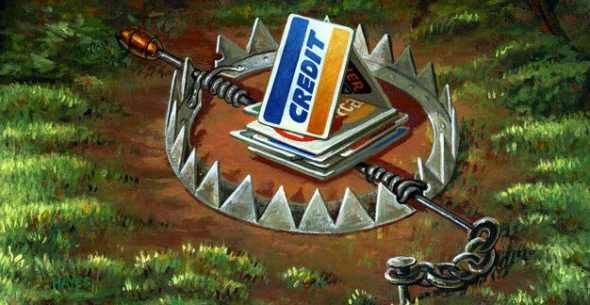
From reading many other great personal finance blogs, I've looked into the many ways that people have successfully rid themselves of their credit card balances. I don't want to transfer the balance to a new card nor would I want to cut up the card. So the most reasonable debt reduction method would be to pay more than just the minimum in multiple payments per billing cycle.
My credit card balance is currently around $900, which mostly went to my little side gig for making money. I just made payment for $300. In a few days, after Amazon.com transfers my money to my bank account, I'll make another payment of $300.
Hopefully, I'll have the balance close to nothing by the end of the summer because that's when the promotional 0% APR offer would end. If I can prove to myself that I can stick to a plan for reducing my debt, I'd develop a good habit for paying back my college loans in the future.

In my situation, the one thing I can do to make a drastic change in the way I spend money to make money. Reducing expenses is a common business practice but it is very efficient way of making a larger profit.
HOW I'M DOING IT
The PSP mod kits that I sell consist of a battery and a memory stick. The cost of the battery is already very cheap ($25) and I cannot find a better alternative. As for the memory stick, I've been purchasing 512mb memory sticks for $7.99 each. After some thorough research, I've found that 256mb memory sticks could be used and they were available in a store for only $4.99 each.
Next, I've given a detailed look at the listing fees on Amazon.com. Apparently, I've been selling in the wrong category, which charges 15% commission while the mroe appropriate category charges only 8% commission. That is almost HALF and that's a BIG difference!
Finally, I'll be reducing the cost of shipping. Firstly, I'm using USPS Priority Mail with delivery confirmation. The shipping boxes, I order online so they're free. I typically make the effort to
THE RESULTS
The total cost of goods, including taxes and shipping fees, was originally $40.55 for a profit of $13.15 per unit. A reduction in expenses would yield a cost of goods of $36.60 for a profit of $17.10. Decreasing expenses by about 10% will increase profits by 30%. A few dollars and cents may not seem like much but as multiple units are sold, there is a big difference in profits.
Everyone has their own hobbies and interests where they will begin to gain knowledge and expertise in whatever that activity may be. Some love playing sports, some collect stamps, and some prefer t
My Hobby
I was an avid collector of exclusive sneakers, namely Nike Air Jordan. Exclusive sneakers have created a culture among many of the youths that are out to make a fashion statement. I could look at someone's shoes and tell the price range of the shoes.
What is unique about these sneakers is the amazingly large demand for a rapidly growing
How I Make Money From My Hobby
I've spent hundreds of dollars on these sneakers and I've stopped buying them as I grow older. But luckily, many of the pairs that I still have are brand new. Since I'm home from school, I have put them up for sale and business is going great. One pair that I bought last year for about $145 was sold for $170. Sure, it may seem like a bad idea to tie up cash on a pair of sneakers for a whole year but I've come to see it as buying a share of stock with a 17% increase in stock price. If I had bought many pairs (as in buying many shares), it seems to be a much better option compared to the many low cost index funds available, which lately carries no stable guarantee.

I entered college not really knowing what to do with regards to how to manage tuition and school finances. I had the idea that every student didn't have the ability to pay their own tuition in its entirety and that they would always need grants, scholarships and school loans.
Now that my financial sense has been upgraded, I regret not taking all the subsidized Stafford loans to the maximum amount possible. My first and second years, I borrowed just enough to pay off tuition, including grants and scholarships. This school year, my sister also entered college so I received much more financial aid and thus, didn't need to take any loans.
Subsidized Stafford loans require repayments half a year after graduation with an interest rate of less than 5%. I checked my college financial aid account and realized that I could have borrowed more than $5000 per year. Even if I didn't need it for tuition, I regret not taking it so I can put it in my HSBC direct online savings account.
It is much better than taking advantage of 0% Balance transfer credit cards since I do not have to pay every month and I could hold the money for more than a year. So this coming year, I'll consider taking the full amount of my loans and making some money from high-yield interest savings, despite the falling rates.

For sophomore and junior year, I received a thousand of dollars from what was called the ACG and SMART grants. I had no idea what got me the grants when I first saw it pop up on the account.When I checked out the FAFSA website this year, I realized why I received those lovely grants.
Since freshmen year, I've never fell below a 3.0 GPA with a Biochemistry major so I got both grants. How great is that!? Sadly though, I am changing my major to Health Science this year so I probably won't be eligible for the SMART grant next year (oh no! I want the $4000!!!). Anyway, it helped junior year at least.
So prospective college students may want to follow my steps (confirm with the university's financial aid office and advisors):
- First pick a major that qualifies for the SMART grant such as biology, computer science, or math.
- Take the courses that will fulfill your intended major (such as English or music) for the first 3 years.
- DO NOT FALL BELOW A 3.0 GPA!
- During the second semester of junior year, change your major to the intended major.
- Check with advisors to make sure that these changes allow you to complete the education that you intended to receive. I wouldn't want to be stuck taking biology courses if I actually wanted an education in music.
Here is the info for the two grants (click here for the direct link):
Academic Competitiveness Grant (ACG)
The Academic Competitiveness Grant (ACG) is for first-year undergraduate students (eligible to receive up to $750) and second-year undergraduate students (eligible to receive up to $1,300). The ACG eligibility criteria are listed below:To be eligible for an ACG, you must:
- Be a U.S. citizen;
- Be Federal Pell Grant eligible;
- Be enrolled full-time in a degree program;
- Be enrolled in the first or second academic year of your program of study at a two-year or four-year degree-granting institution;
- Have completed a rigorous secondary school program of study (after January 1, 2006, if a first-year student, and after January 1, 2005, if a second year student);
- Not have been previously enrolled in an undergraduate program (if you are a first-year student); and
- Have at least a cumulative 3.0 grade point average on a 4.0 scale for the first academic year (if you are a second-year student).
National Science and Mathematics Access to Retain Talent Grant (National SMART Grant)
The National Science and Mathematics Access to Retain Talent Grant (National SMART Grant) is for third- and fourth-year undergraduate students who are eligible to receive up to $ 4,000 each year.To be eligible for a National SMART Grant you must:
- Be a U.S. citizen;
- Be Federal Pell Grant eligible;
- Be enrolled full-time pursuing a major in physical, life or computer sciences, mathematics, technology, engineering, or a critical foreign language; and
- Have at least a cumulative 3.0 grade point average on a 4.0 scale